


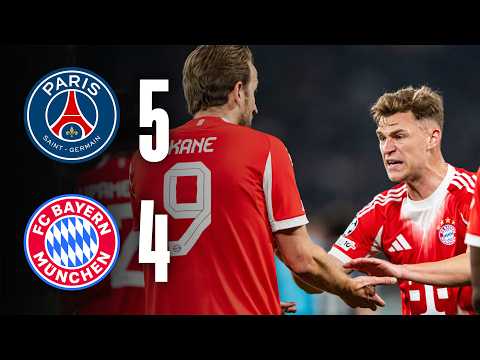
Last week’s events at the Parc des Princes rendered pragmatic football a thing of the past. The 5-4 scoreline in the first leg of the Champions League semi-final between PSG and Bayern Munich was no statistical anomaly, but rather the system’s peak. It was a collision of two philosophies where the offensive was absolute and risk-taking was the only valid currency.
Why was the defending so futile? The answer can be found in the pressing structure. Both sides utilized a tactical setup that pushed the backline nearly to the center circle. This carved out corridors for vertical sprints, which Kylian Mbappé and Jamal Musiala exploited with surgical precision. In the modern game of 2026, ball retention is no longer synonymous with safety; instead, it has become a tool of provocation.
Particular attention is focused on Matvey Safonov. It is a paradox: a goalkeeper concedes four goals yet emerges as the hero. His distribution allowed PSG to bypass Bayern’s relentless pressure, creating a numerical advantage in the initial attacking phase. To be fair, his positioning errors for the second goal were glaring. However, his stoppage-time save from the top corner might ultimately be what sends the Parisians to the final.
Can such a model of play be sustainable? It is highly improbable. Yet, matches like this restore football's fundamental value: pure spectacle. Ahead of the return leg in Munich, the question remains: will Vincent Kompany opt for an even more aggressive approach, or will we see an attempt to stifle the game?
This fixture proved that, by 2026, the individual brilliance of elite forwards has finally outpaced current defensive methodologies. Looking ahead, this trend will force a search for a new profile of defender—sprinters capable of covering forty meters of open space behind them.
Is traditional football prepared for a 5-4 scoreline becoming the new standard for marquee matches? Judging by the reaction, spectators seem to have quite a taste for such chaos.


