


The global music industry is increasingly distancing itself from the era of physical discs, choosing instead to measure its impact through the continuous flow of digital streams. This fundamental shift represents a departure from traditional sales metrics, as the industry recalibrates its definition of success to align with the habits of the modern listener.
Established in 1958, the Recording Industry Association of America (RIAA) has been instrumental in evolving the certification systems that define musical achievement. These transformations reflect the most significant cultural transition of the 21st century: the movement away from the static ownership of music toward an era where sound is experienced as a persistent and living presence in our daily lives.
A major turning point in this evolution occurred in 2013 when the RIAA began incorporating streaming data into its prestigious award calculations. By 2016, the methodology was further expanded to establish a definitive mathematical standard for the digital age: 150 on-demand streams are now equivalent to one individual track sale, while 1,500 streams represent the equivalent of one full album unit.
Through these changes, music has effectively ceased to be a mere object of purchase and has instead become a process of presence. The value of a creative work is no longer locked behind a single transaction but is instead measured by its ongoing integration into the listener's environment.
The iconic industry milestones of Gold, Platinum, and Diamond certifications—representing 500,000, 1 million, and 10 million units respectively—now serve a broader purpose. Beyond tracking commercial sales, these statuses reflect the depth of a track's penetration into the collective consciousness and the daily routines of the global audience.
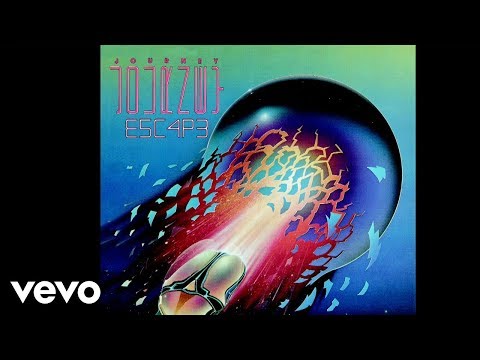
The enduring legacy of the group Journey and their classic anthem, "Don't Stop Believin'," provides a striking example of this new reality. Originally released in 1981, the song achieved a massive 18-time platinum certification in 2024, a feat driven largely by the streaming era. Its success is no longer confined to the moment of its debut; rather, it has become a temporal resonance that expands over decades.
While contemporary releases born within the digital ecosystem often reach these certification heights with unprecedented speed, it is the "long-lived" tracks that prove a vital point. Music does not simply disappear after its initial peak; it accumulates within the cultural field, gaining momentum and relevance as it is rediscovered by new generations.
By adapting its metrics to these behavioral shifts, the RIAA is essentially creating a sophisticated system for measuring the intangible. In this new framework, the true worth of a musical work is determined not by who owns the physical copy, but by the sustained attention and devotion it commands from the public.
What has this transition contributed to the overall soundscape of our planet? It has fundamentally altered our relationship with melody and rhythm, liberating music from its status as a physical commodity or a tangible item stored on a shelf.
Ultimately, music has transitioned into a constant flow rather than a static thing. We have entered a period where we no longer simply buy a product; instead, we return to a shared auditory experience time and time again, reinforcing the song's place in the digital tapestry of modern life.


