


The 70th anniversary of the Eurovision Song Contest is currently being prepared for its grand showcase in May 2026, with the historic city of Vienna serving as the host. The primary venue for this landmark event will be the Wiener Stadthalle, a renowned arena capable of hosting more than 16,000 spectators.
The competition is being organized through a collaborative effort between the European Broadcasting Union (EBU) and the Austrian national broadcaster, ORF. As with previous years, the event will be held under the permanent and evocative slogan, "United by Music," reflecting the contest's long-standing mission of continental harmony.
National selection processes for the 2026 edition began as early as December 2025, as countries started the search for their representatives. Romania was among the first nations to finalize its entry, marking a significant milestone in its recent history with the competition.
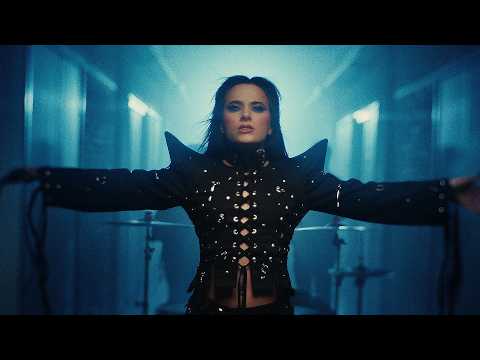
On March 4, 2026, singer Alexandra Căpătînescu emerged victorious in the Romanian national final with a powerful rock composition titled "Choke Me." The decision was made exclusively by a professional jury, highlighting the technical quality of the performance. Căpătînescu, who hails from Galați, originally rose to fame after winning the television show "Vocea României" in 2023.
The participation of Alexandra Căpătînescu carries symbolic weight this year, as Romania officially returns to the contest alongside Bulgaria and Moldova. This reintegration follows a period of administrative disagreements and a temporary hiatus in participation for these three nations.
However, the jubilee contest has already become a focal point for intense international debate. The decision by the European Broadcasting Union to maintain Israel's participation has triggered a significant wave of protests across the broadcasting community. Following a pivotal EBU General Assembly meeting on December 4, 2025, several countries voiced their formal opposition.
By the time the final preparations for Eurovision 2026 were underway, five nations—Spain, Ireland, the Netherlands, Slovenia, and Iceland—had officially announced their withdrawal from the competition. This represents the largest collective boycott of the event since the 1970 edition of the contest.
The Irish broadcaster RTÉ justified its decision by citing the ongoing humanitarian crisis and the significant loss of civilian life in Gaza. Similarly, the Spanish broadcaster RTVE noted that the proposed amendments to the contest's rules failed to address the core ethical concerns raised by the public.
Despite the growing list of withdrawals, Portugal's participation has been confirmed by its national broadcaster, RTP. However, the atmosphere remains tense as several artists competing in the national selection, Festival da Canção, have suggested they might refuse to perform in Vienna if they win the local competition.
In an effort to address these controversies and restore faith in the fairness of the event, the European Broadcasting Union has announced several critical changes to the contest's official rules. These measures are designed to enhance the integrity of the voting process and reduce external influence.
The updated regulations for the 2026 contest include several key structural changes:
- A reduction in the maximum number of votes allowed from a single device, dropping from 20 down to 10.
- The reintroduction of professional juries to the semi-final rounds for the first time since 2022.
- Stricter limitations on the involvement of third-party organizations in the promotion and marketing of individual contestants.
These regulatory adjustments are a direct response to the outcomes of Eurovision 2025. During that edition, Israel secured a second-place finish and received the highest number of public votes, which led to widespread discussions regarding the potential impact of organized external voting campaigns.
The Grand Final of the 70th Eurovision Song Contest is officially scheduled to take place on May 16, 2026. As Vienna prepares for the arrival of delegations from across the globe, the event stands as a complex intersection of artistic performance and international diplomacy.
Beyond the scores and the spectacle, Eurovision has historically served as a platform where nations hear one another through the shared language of melody and rhythm. It is a stage that often reflects the broader cultural and political climate of the era.
While the 2026 edition highlights the deep tensions of our current time, it also reinforces the idea that music remains a vital space for international dialogue. As long as the music continues to play, the conversation between different cultures persists, proving that sound can bridge gaps where words often fail.


