


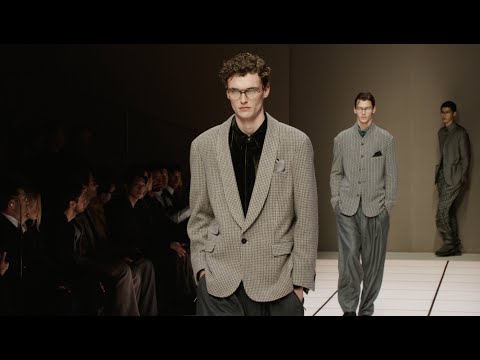
The Milan Men’s Fashion Week for the Autumn/Winter 2026 season has set a definitive tone for the industry, centering on the dual themes of ancestral heritage and stylistic evolution among the world's leading fashion houses. This particular season represented a watershed moment for the global fashion landscape, characterized by significant structural transitions and a focus on longevity. Most notably, the schedule featured the inaugural collection from the house of Giorgio Armani under its newly appointed leadership, alongside a profound and intellectual exploration of historical archives at Zegna.

Under the visionary artistic direction of Alessandro Sartori, the house of Zegna unveiled a collection rooted in the evocative concept of the "family wardrobe." This philosophical approach positions high-end tailoring not merely as seasonal attire but as a precious heirloom intended to be passed down through successive generations. To illustrate this connection between the past and the present, the presentation featured a curated installation of historical garments dating back to the 1930s, which included the very first jacket model ever produced by the brand's founder.
Sartori successfully modernized these archival silhouettes by integrating sophisticated technical advancements that cater to the contemporary man. A standout innovation within the collection was the introduction of double-breasted suits equipped with reversible buttons, a clever design choice that allows for three distinct ways of fastening the garment. Furthermore, the brand’s commitment to sustainability and durability was evident in its material choices, which featured textiles crafted from recycled paper fibers and the signature Trofeo wool, blending tradition with future-facing craftsmanship.
The Giorgio Armani show marked a poignant milestone as it presented the first men's collection under the sole creative guidance of Leo Dell'Orco. This transition follows the passing of the legendary Giorgio Armani in September of last year, an event that signaled the end of an era for Italian fashion. Dell'Orco, a veteran who collaborated closely with the founding designer for 40 years, managed to strike a delicate balance between honoring the brand’s established DNA and introducing subtle, contemporary refinements to the house style.
Titled "Cangiante" (meaning iridescent), the collection broke away from the traditional neutral palette typically associated with the Armani name. Instead, it introduced striking and unexpected hues such as lapis lazuli and amethyst. These vibrant tones were masterfully applied to luxurious fabrics, including velvet, cashmere, and chenille, creating a dynamic play of light and shadow. The silhouettes were slightly updated with higher-cut jackets and a focus on rich textural contrasts, signaling a sophisticated new chapter for the brand's aesthetic.
The significance of this debut was further amplified by the high-profile attendance of global icons, including Ricky Martin and Hudson Williams, whose presence underscored the enduring cultural weight of the Armani legacy. As the FW26 season concludes, it is clear that Milan’s leading fashion houses are successfully navigating the complex path between preserving their storied pasts and embracing a bold, innovative future. The focus remains on quality, history, and the evolution of the modern masculine wardrobe.


