


Homalomena
Share
Author: Svetlana Velhush
Homalomena
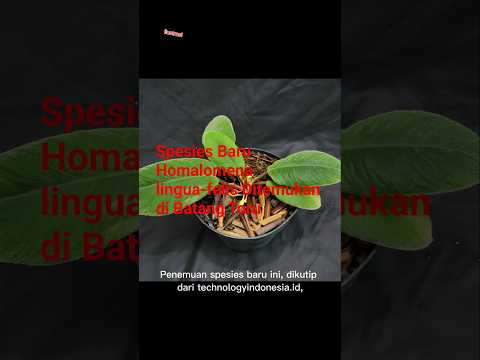
In a significant botanical breakthrough, researchers have formally identified a new member of the Araceae family hailing from the lush landscapes of North Sumatra, Indonesia. This newly described species, scientifically named Homalomena lingua-felis, has captured the attention of the scientific community not just for its rarity, but for its extraordinary physical characteristics. The plant’s name is a direct reference to the unique tactile experience of its foliage, which is densely covered in rigid hairs that mimic the rough, sandpaper-like sensation of a feline's tongue. This discovery was officially documented and published in the esteemed journal PhytoKeys in March 2026, marking a milestone in Indonesian floral research.
The specific location of this find is the Batang Toru Forest, situated within the Tapanuli region, an area renowned for its dense canopy and hidden biological treasures. What sets Homalomena lingua-felis apart is the upper surface of its leaves, which features a specialized layer of stiff hairs known as papillae. When touched, these structures provide a distinct texture that is remarkably similar to the tongue of a domestic cat, a feature that serves as both a diagnostic trait for botanists and a point of fascination for nature enthusiasts. This morphological adaptation is central to the plant's identity and its survival strategy in the wild.
While Sumatra is home to other "hairy" species within the Homalomena genus, this new addition is easily distinguishable from its relatives. Specifically, it stands out from the closely related H. pexa due to the sheer density and specific texture of its pubescence. The intricate arrangement of these hairs is far more than a cosmetic feature; it represents a specialized evolutionary path that differentiates it from other flora in the region. Botanists noted that the tactile feedback of the leaves is one of the most reliable ways to identify the species in the field, highlighting the precision of nature's design.
Ecologically, Homalomena lingua-felis is classified as a lithophyte, meaning it has evolved to thrive on rocky surfaces rather than in soil. Its natural habitat is characterized by constant moisture and frequent contact with moving water, often found clinging to the slippery stones surrounding tropical waterfalls. Living in such a high-energy environment requires specific physical attributes to prevent damage from the relentless flow of water. The plant has successfully carved out a niche in these damp, rocky corridors where few other species can maintain a foothold.
The dense layer of rigid hairs on the leaves serves a critical protective function, acting as a biological version of a high-tech water-repellent coating. This "feline" texture creates an air gap that helps shed excess water quickly, while also providing a cushioning effect against the physical impact of heavy rain or splashing water from nearby falls. It is a masterclass in natural engineering, providing a cushioned, hydrophobic shield that allows the plant to photosynthesize effectively even when subjected to a near-constant tropical "shower." This adaptation ensures that the leaf surface remains functional and free from debris or fungal growth.
The discovery of Homalomena lingua-felis further emphasizes the immense and still largely unexplored biodiversity of Sumatra’s Batang Toru Forest. As one of the planet's final frontiers for botanical research, this region continues to yield species previously unknown to science, underscoring the urgent need for habitat preservation. The authors of the study have issued a clear directive to the public and plant enthusiasts: because of the fragile nature of these wild populations, any specimens intended for domestic growth must be sourced exclusively from cultivated stock. Protecting the wild ancestors of these plants is paramount to maintaining the ecological integrity of the Tapanuli region.
Beyond its scientific importance, the "cat's tongue" plant has already sparked significant interest among international aroid collectors and houseplant aficionados. Its striking appearance and the novelty of its "furry" leaves make it a highly sought-after addition to specialized collections. Ultimately, Homalomena lingua-felis stands as a vivid testament to the wonders of evolution, showcasing how a plant can develop such specific, tactile adaptations to survive and thrive in the demanding conditions of the Indonesian rainforest. It remains a beautiful example of the intricate relationship between form and function in the natural world.
PhytoKeys Journal: Научная публикация с полным описанием вида Homalomena lingua-felis
Kekayaan hayati Indonesia kembali bertambah dengan ditemukannya spesies tanaman baru bernama Homalomena lingua-felis di kawasan Batang Toru, Sumatera Utara. Tanaman ini memiliki ciri unik berupa permukaan daun dengan rambut lebat yang menyerupai tekstur lidah kucing. Meski baru


