


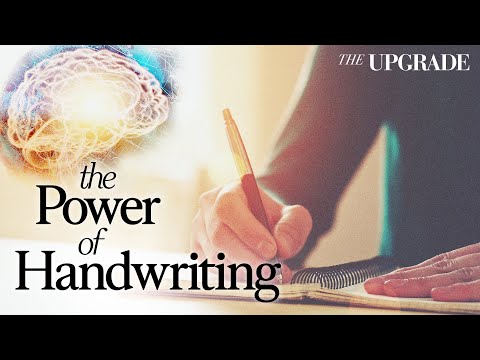
Neuroscience Confirms Handwriting's Cognitive Edge Over Typing for Memory Encoding
Edited by: Vera Mo
The accelerating integration of generative Artificial Intelligence into text production and language acquisition has amplified the discourse surrounding the cognitive value of digital input methods versus established, manual techniques. As of February 16, 2026, while digital interfaces remain pervasive across professional and educational settings, the question of cognitive equivalence between these input modes remains a critical area of investigation. Empirical research consistently substantiates a potent correlation between the act of handwriting and enhanced memory retention and learning efficacy, a phenomenon observed even as keyboard use has been standard since the nineteenth century.
Recent neuroimaging studies reveal distinct cognitive divergences, indicating that manual inscription promotes superior recall and more profound analytical comprehension. This superior engagement stems from the brain actively participating in the intricate process of forming characters and structuring thoughts, a mechanism known in cognitive science as generative encoding. Specifically, when college students handwrote words, they exhibited increased connectivity across brain regions associated with memory formation compared to when they typed the same words. Neuroscience investigations employing high-density Electroencephalography (EEG) have demonstrated that handwriting cultivates substantially more intricate cerebral connectivity than typing.
This enhanced connectivity involves neural networks linked to motor function, visual processing, and memory encoding, processes deemed indispensable for robust learning. Furthermore, notes captured manually frequently necessitate students to internally paraphrase and reformulate concepts into their own lexicon, a contrast to the potentially passive transcription afforded by a keyboard. Research led by Giuseppe Marano and colleagues at the Catholic University of the Sacred Heart in Rome analyzed various neuroimaging studies, finding that handwriting activates a broader, more integrated neural network, including the premotor and parietal cortices, cerebellum, and hippocampus, which govern fine motor control, spatial awareness, and memory consolidation.
Even preceding the current proliferation of generative AI, comparative experiments between handwritten and typed outputs frequently documented that handwritten compositions displayed greater lexical diversity, suggesting the production method inherently influences textual stylistic quality. In 2026, with generative AI becoming nearly ubiquitous, this contrast holds heightened relevance; while AI can streamline drafting, an over-reliance raises significant concerns regarding the cultivation of critical thinking and the capacity to recall text from long-term memory. Studies have also indicated that excessive reliance on AI for cognitive tasks can lead to cognitive offloading, potentially diminishing critical-thinking skills and overall cognitive flexibility.
Researchers at the Norwegian University of Science and Technology, including Professor Audrey van der Meer, have shown that handwriting activates low-frequency brain waves, specifically alpha and theta bands, which are vital for memory processes, a phenomenon not observed during typewriting. Despite the relentless march of technological advancement, 2026 is witnessing a notable recommitment to handwriting, particularly cursive, within the educational frameworks of several American states. Governor Phil Murphy signed legislation in New Jersey requiring the reintroduction of cursive instruction starting in the 2026-2027 school year, linking the skill to reading founding documents like the Constitution. Similarly, Pennsylvania mandated K-12 cursive instruction, effective April 12, with proponents citing cognitive development and historical literacy as key rationales.
This educational resurgence is empirically grounded in science that confirms handwriting develops fine motor skills and memory, underscoring its profound developmental value even within environments saturated by screens. This evidence supports a balanced approach, utilizing keyboards for speed in long-form writing while prioritizing handwriting for tasks that demand deeper cognitive encoding, such as note-taking during lectures.
17 Views
Sources
The Conversation
Bright-Minds
Frontiers
medriva.com
The Economic Times
Medium
Read more articles on this topic:


Did you find an error or inaccuracy?We will consider your comments as soon as possible.