


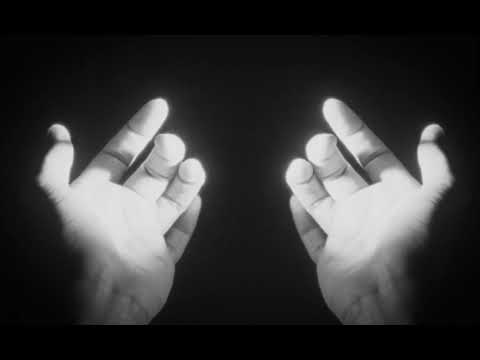
Captions: WILLOW - nothing and everything (Official Visualizer)
Share
Author: Inna Horoshkina One
Captions: WILLOW - nothing and everything (Official Visualizer)
Sometimes, the release of a new album is not just a commercial event. It represents a fundamental shift in an artist's sonic trajectory.

WILLOW, Jahnavi Harrison - Rise (Visualizer Video)
In the year 2026, Willow Smith introduced her latest creative project, Petal Rock Black—a body of work where pop music transcends its traditional genre boundaries and becomes a vast territory for exploration.
This specific album does not resonate like a simple continuation of her previous career path. Instead, it sounds like a definitive transition into a new artistic era.
The recording process featured a prestigious ensemble of musicians who are currently instrumental in shaping the language of modern spiritual improvisation:
Kamasi Washington
George Clinton
Tune-Yards
Jon Batiste
This roster is far more than a simple collection of guest features. It serves as a comprehensive map of diverse musical universes, including:
The visionary aesthetics of Afrofuturism
The expansive reaches of cosmic jazz
The visceral, physical pulse of funk rhythm
A living, breathing form of improvisational intelligence
The album successfully synthesizes these disparate elements into a single, unified sonic environment.
In Petal Rock Black, the familiar and predictable structures of the traditional pop song have almost entirely vanished.
In their place, a new set of priorities emerges for the listener:
The natural cadence of human breathing
A sense of rhythmic plasticity and fluid movement
The human voice utilized as a versatile, primary instrument
The profound significance of the space between individual notes
In this context, the music does not attempt to lead the listener through a predetermined narrative.
Instead, it extends a quiet invitation for the audience to simply be present within the soundscape.
This shift represents a departure from the standard language of the music industry, moving toward a language of pure perception.
The involvement of George Clinton in this project carries a particularly symbolic weight for the history of the genre.
His pioneering work during the Parliament-Funkadelic era established music as a cosmic philosophy centered around rhythm and liberation.
In WILLOW’s new album, this foundational impulse is reimagined not as a vintage style, but as a contemporary state of consciousness.
Furthermore, the masterful saxophone contributions from Kamasi Washington add layers of profound depth to the overall sound.
Through his performance, jazz is transformed into a medium for expressing internal movement and spiritual growth.
The significance of this album extends far beyond its individual tracks or technical merits.
It highlights an emerging trend where young contemporary artists no longer feel compelled to choose between rigid genre classifications.
Instead, they are making deliberate choices based on emotional and psychological states.
They navigate the complex intersections between rhythm, the physical body, ancestral memory, vast open spaces, and the power of silence.
Consequently, music is reclaiming its role as an ongoing process rather than a static, finished product.
Often, the most significant changes in music occur quietly, without the need for grand manifestos or formal genre declarations.
Yet, it is precisely these types of subtle, boundary-pushing works that succeed in opening up entirely new dimensions of human perception.
The album Petal Rock Black resonates as a transitional chord—a pivotal moment where pop music stops merely describing the world and begins to actively investigate it.
And perhaps this is exactly why music is once again becoming a vital meeting point for the intersection of internal and cosmic rhythms.


