



TOM MACDONALD – ANTI (Fan Made Music) | 2026
Share
Author: Inna Horoshkina One
TOM MACDONALD – ANTI (Fan Made Music) | 2026
The history of popular music is essentially a chronicle of the struggle for the right to be heard in one’s own voice.
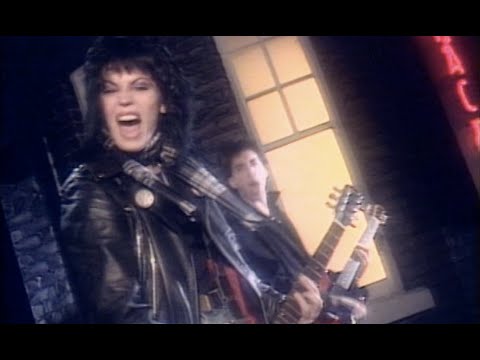
Joan Jett & The Blackhearts «Bad Reputation» - Official Music Video (1983)
Throughout the decades, this struggle has taken on various sounds:
sometimes loud
sometimes anxious
sometimes danceable
and today — high-tech
Yet its core meaning remains unchanged: music has always been a space for freedom.
One of the first iconic anthems of independence was Joan Jett’s "Bad Reputation."
It was a definitive act of musical autonomy:
making no apologies
refusing to conform
and declining to explain one's identity to society
The lyric
I don’t give a damn about my reputation
“I truly don't care what people think of my reputation.”
became the formula for a new rock persona. For the first time, freedom sounded like a definitive choice.
In the 1990s, the theme of freedom underwent a shift.
Nirvana’s "Smells Like Teen Spirit" became the voice of a generation that wasn't just protesting—it was searching for itself.
Kurt Cobain’s music spoke of a different kind of independence:
the right to be imperfect
the right to doubt
the right to seek one's own path
Freedom became an internal process.
In the following decade, the theme moved to the dance floor.
Icona Pop’s hit "I Love It" showcased a new form of independence.
It was no longer about protest or anxiety.
It was the energy of choice.
Freedom began to sound effortless:
without explanations
without excuses
without the need to argue with the world
It became a state of being.
Today, we are witnessing another turning point.
Music no longer requires a studio, a contract, or industry clearance.
Artificial intelligence is transforming the very architecture of musical expression.
The fan-led AI project ANTI, inspired by Tom MacDonald’s aesthetic, demonstrates a new form of countercultural expression. This is no longer merely a song. It is an experiment with the very concept of authorship.
The ANTI project was created using generative tools for both music and video.
It reproduces the hallmarks of independent conscious rap:
a rapid-fire flow
a gritty delivery
a direct social stance
and a refusal to bow to the pressure of mainstream narratives
But the most important aspect lies elsewhere.
The author is no longer the industry. The author is now the individual with the tool.
Hip-hop has always been the language of autonomy.
From the streets of New York to today's digital studios, it retains a single function:
to give a voice to those who wish to speak directly. Today, artificial intelligence is expanding this opportunity. It does not replace the author.
It expands the space of their presence.
Looking at the evolution of freedom anthems in music, it becomes clear:
the 1980s — freedom as a refusal to conform
the 1990s — freedom as self-discovery
the 2010s — freedom as self-acceptance
the 2020s — freedom as the expression of one's own voice
Music has stopped asking for permission to be heard. It has learned to sound on its own.
It serves as a reminder of something music has known for a long time: freedom does not emerge from technology. It does not depend on the stage, the industry, or the tools.
It begins within the individual.
Every decade, its sonic forms change:
rock guitar
grunge
the dance floor
streaming
artificial intelligence
But freedom itself remains the same. Only the ways of being heard change.
Today, artificial intelligence opens up a new opportunity:
to speak directly to the world
to create without intermediaries
to share one's voice instantly
Not because technology creates freedom. But because it helps that freedom be heard more quickly.
Music has always been a space for internal independence.
Now, it is becoming a space for that independence to be heard instantly.
And whereas freedom once sought out a stage, today the stage finds freedom itself.
Igor Stravinsky
My freedom consists in my being able to be myself.


