


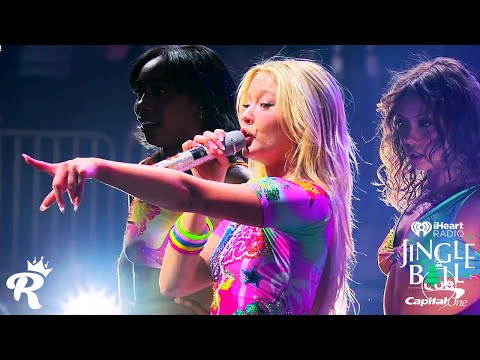
Zara Larsson | Lush Life | Full Performance
Share
Author: Svetlana Velhush
Zara Larsson | Lush Life | Full Performance
Have you noticed that the 2026 music charts bear a striking resemblance to playlists from a decade ago? While neural networks churn out thousands of new tracks every second, humanity has suddenly slammed on the brakes. We find ourselves in a "time loop" where Zara Larsson and Rihanna blast from every other smartphone, and teenagers too young to remember 2016 are meticulously recreating its aesthetic.
Psychologists refer to this phenomenon as "reflective nostalgia." In a world changing at breakneck speed, the brain searches for islands of stability. Music from ten years ago serves as a safe haven. These are the sounds of an era when the future felt predictable and AI was little more than a science fiction trope.
Yet, sentimentality isn't the only factor at play. By 2026, the music industry has become a battleground of algorithms. Short-form video platforms have realized that trying to make you fall in love with a new song is both expensive and risky. It is far more efficient to "activate" an existing neural pathway. The algorithm identifies a track you listened to during your best moments and weaves it into your feed. The voyeurism of memory has evolved into a multi-billion dollar business.
Ultimately, this leads to the erosion of the very concept of "relevance." We are entering an "omni-temporal" state where music never ages, but simply awaits its turn in the next refresh cycle.
Is this trend beneficial for culture? On one hand, we gain access to the very best of what has been created. On the other, does this comforting background noise drown out the voices of new talent who cannot compete with the sheer power of our memories?
The world of 2026 favors proven comfort over unknown risks. We are spinning in this loop, and we seem to enjoy it. The only question is what we will be listening to ten years from now: the same old hits, or a nostalgic longing for today's nostalgia?
Official Charts (UK) — Отчет о возвращении Зары Ларссон в топ-10 в апреле 2026 года.


