



The year 2025 was more than just a date on the calendar; it was a distinct soundscape. It echoed through chart-topping hits, the silence between musical phrases, landmark achievements, and poignant farewells. It was a time where the boundaries between music, advancing technology, and the collective human consciousness dissolved, becoming completely interwoven.
GAYA ONE interprets this period as a fundamental shift: moving away from a rigid industry structure toward an expansive sonic field, transitioning from defined genres to fluid emotional states, and evolving from isolated individual voices toward a unified global sound.

The Epicenter: Global Charts Mirroring the Zeitgeist
The Billboard Year-End Hot 100, released in December, didn't just measure popularity; it quantified vibrational staying power. These weren't fleeting moments or random occurrences, but the sounds that truly anchored listeners throughout the year.
Securing the top spot was Die With A Smile, the first official pairing between Lady Gaga and Bruno Mars. This track also claimed the title of Spotify’s most-streamed song globally for the year. It represented a mature dialogue, rich with vulnerability and light—a rare instance where a massive commercial hit deepened its emotional resonance rather than sacrificing it.
Furthermore, Luther, the powerful track from Kendrick Lamar and SZA, spent 13 weeks at number one and garnered multiple nominations for the Grammy Awards 2026. This success signaled a clear confirmation: thoughtful, conscious lyricism is no longer a niche market; it has become the absolute center of popular music.
Regional Voices: A World Breathing in Harmony
One of 2025’s most significant developments was that the global music scene did not lose its core focus; rather, the Center resonated more clearly, allowing an increasing number of distinct voices to find resonance around it. The era of a single, top-down musical monologue has ended, replaced by a vibrant polyphony, where every local scene acts as an essential string on one massive, shared instrument.
In South Africa, Zee Nxumalo successfully concluded a four-year run of dominance by Taylor Swift, emerging as the country's top-streaming female artist. Her single “Ngisakuthanda” surpassed 100 million streams. Its success wasn't due to pandering to global market tastes, but because it was perfectly tuned to the truth of its locale: reflecting the pulse of the local scene, the authentic language of the streets and the heart. This authenticity is precisely why the world heard it so clearly—a signal that matched the era’s prevailing frequency.
Individual Momentum: Breakthrough Solos
Amidst this growing chorus of voices, 2025 unexpectedly reinforced the power of the singular statement—not necessarily the loudest, but the most precise.
The track Ordinary propelled Alex Warren to ten weeks atop the Hot 100 and earned him the title of SoundExchange Breakout Artist. In parallel, Billie Eilish with Birds Of A Feather and the pairing of ROSÉ × Bruno Mars with APT. both secured major nods for the Grammy 2026. The solo voice regained significance not by shouting over the noise, but by striking the right chord.
Legacy and Farewell: Notes That Endure
The year 2025 was marked by departures—some quiet, others monumental, both personal and historical. We bid farewell to figures who didn't just compose music; they shaped the very fabric of time.
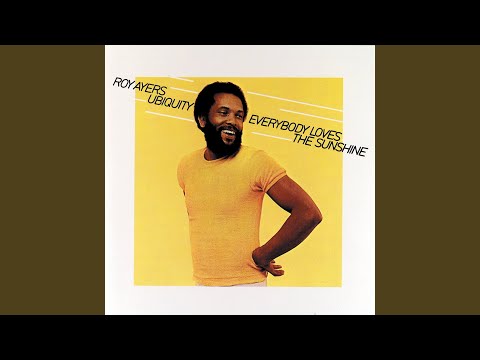
The passing of Roy Ayers, the acknowledged godfather of neo-soul, leaves behind a legacy. His track Everybody Loves the Sunshine continues to echo through samples and across generations—like warm sunlight that never truly sets, only shifts its angle.
The world also mourned Ozzy Osbourne, a true architect of heavy metal, and Roberta Flack, whose voice embodied rare quietude and profound depth. Their departures serve not as endings, but as anchors, solidifying the roots from which new creativity springs.
The Economics of Rhythm: Music Scaling New Heights
In 2025, Beyoncé officially joined the ranks of musicians with billionaire status according to Forbes. The Cowboy Carter album and accompanying tour generated hundreds of millions, cementing a new industry standard: ownership of rights and a holistic artistic vision are now more crucial than the mere act of releasing a product.
Music has fundamentally transformed from a simple commodity into a complex ecosystem, complete with its own governing principles, resources, and energy flows.
The Planet’s New Voice: AI Enters the Charts
2025 definitively established artificial intelligence not as a mere assistant, but as an active participant in the creative process.
AI composers, human-algorithm co-creations, and generative sound designs began appearing in charts, major ad campaigns, and festival lineups. More importantly, perception shifted. AI ceased being viewed as a human competitor and instead became an amplifier of human intonation.
This is not a replacement for feeling; it acts as a mirror, allowing humanity to perceive its own expressions with greater clarity.
What Did This Year Add to the World’s Sound?
The year 2025 introduced complexity. It made music less vertical and more spherical. It successfully linked local artists with the global stage, living creators with digital intelligence, and historical memory with future innovation.
It added dimension—as if the world suddenly found more air in its lungs. Music is no longer a hierarchy moving from the top down, but a sphere where every point matters: the local hit sits beside the global record, raw human emotion next to digital precision, memory intertwined with the next step. Everything resonates within a single, shared tapestry.
The most remarkable element here is the feeling of resonance. It’s hearing a song from another country and suddenly recognizing yourself within it. The voice and language may be foreign, but the emotion hits the mark precisely. When an algorithm highlights an inflection point, you hear deeper. This is the new rhythm: we stopped listening to music in isolation; we started listening to the world itself.
We move into 2026 not with a shout or a frantic race, but with the delicate tuning of an instrument before a major performance. If one feeling defines 2025, it is simple and beautiful: how fascinating it is to be alive at a moment when the planet is sounding—and you are sounding along with it.
May the new year bring you more moments of self-recognition, more light in your voice, and more music that finds you exactly when you need it. In unity, in love, and in the collective Rhythm of the World.


