


Young Explorers Aboard the OceanXplorer: Science, Storytelling & Stewardship at Sea
Share
Author: Inna Horoshkina One
Young Explorers Aboard the OceanXplorer: Science, Storytelling & Stewardship at Sea
The international initiative OceanX has officially announced the launch of the OceanX Shared Voyage 2026, a groundbreaking educational expedition. This program is designed to bring together university students from both the United States and China for a series of collaborative deep-sea research missions. These students will live and work together aboard the OceanXplorer, which is widely considered the most advanced marine research vessel in the world today.
This project represents a rare and significant example of modern international scientific cooperation. In a world where geopolitical tensions often dominate the headlines, the OceanX Shared Voyage 2026 positions the ocean not as a dividing line between nations, but as a shared space for the collective study of life on Earth. It is a testament to the power of science to transcend borders and foster mutual understanding.
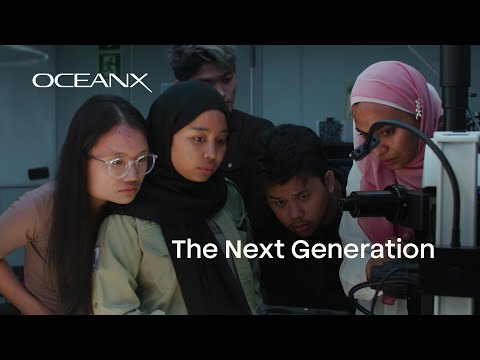
The Shared Voyage program introduces a unique educational framework where young scientists from diverse academic backgrounds work side-by-side. These researchers engage in hands-on oceanography, operating within high-tech laboratories and utilizing advanced marine technologies at significant depths. This immersive experience goes beyond traditional classroom learning, offering a real-world look at the complexities of marine biology and geology.
This immersive experience is designed to cultivate a new breed of oceanic researchers. For this rising generation, the vast blue expanse of the world's oceans is viewed through the lens of collective stewardship and shared global responsibility. The goal is to ensure that the future of our planet is managed by leaders who understand that the ocean's health is a common concern for all of humanity.
At the heart of this mission is the OceanXplorer, a vessel that serves as a premier platform for future science. It is currently recognized as one of the most technologically sophisticated marine research platforms in existence. The ship is designed to bridge the gap between scientific discovery and global awareness, providing researchers with the tools they need to explore the furthest reaches of the underwater world.
The vessel is equipped with a comprehensive suite of tools designed to unlock the mysteries of the deep, including:
By integrating these technologies, the expedition transforms the scientific process into a platform for open knowledge. The discoveries made on board are not kept behind closed doors but are shared with a global audience. This approach ensures that the wonders of the deep sea are accessible to everyone, fostering a worldwide connection to the marine environment.
The collaborative nature of this expedition, specifically involving students from the United States and China, carries profound significance in the current international landscape. It demonstrates that oceanography remains a resilient and productive field for global engagement. Even in challenging times, the pursuit of scientific truth provides a stable foundation for dialogue between the world's leading powers.
Throughout history, maritime exploration has frequently served as a cornerstone for what is often called trust diplomacy. Through the shared creation of maps, the execution of joint expeditions, and the celebration of mutual discoveries, nations have historically found common ground on the high seas. These activities have often paved the way for broader diplomatic breakthroughs.
The Shared Voyage 2026 continues this long-standing tradition, applying it to the next generation of thinkers. By working together on the water, these students are building bridges that transcend terrestrial borders and political differences. They are learning that the challenges facing the ocean require a unified response that no single nation can provide alone.
The ocean remains the only physical system on Earth that connects continents more rapidly than borders can divide them. It is a massive, fluid engine that drives the most critical processes of our living world. From the air we breathe to the food we eat, the influence of the ocean is felt in every corner of the globe.
Essential planetary functions are facilitated by the ocean, including:
Consequently, joint oceanic research initiatives are always more than just scientific endeavors. They serve as a functional model for civilizational cooperation, proving that humanity can unite to address the challenges facing our shared environment. These programs act as a blueprint for how we might solve other global crises through shared effort and expertise.
The OceanX Shared Voyage 2026 ultimately changes the narrative of how we perceive our planet's waters. It encourages a shift in perspective, viewing the ocean not as a mere resource to be extracted or a barrier to be guarded, but as a vital, living system that holds the key to our common future. This shift is essential for the long-term survival of our global ecosystem.
When these young scientists embark on this journey together, they are doing more than just collecting data or conducting experiments. They are establishing a new culture of trust between continents. As they return to their respective countries, they carry with them the experience of cooperation, ensuring that the future of ocean science is defined by unity rather than division.

